Research & Knowledge / Blog
BlogHow do you light a hamlet no authority has mapped?
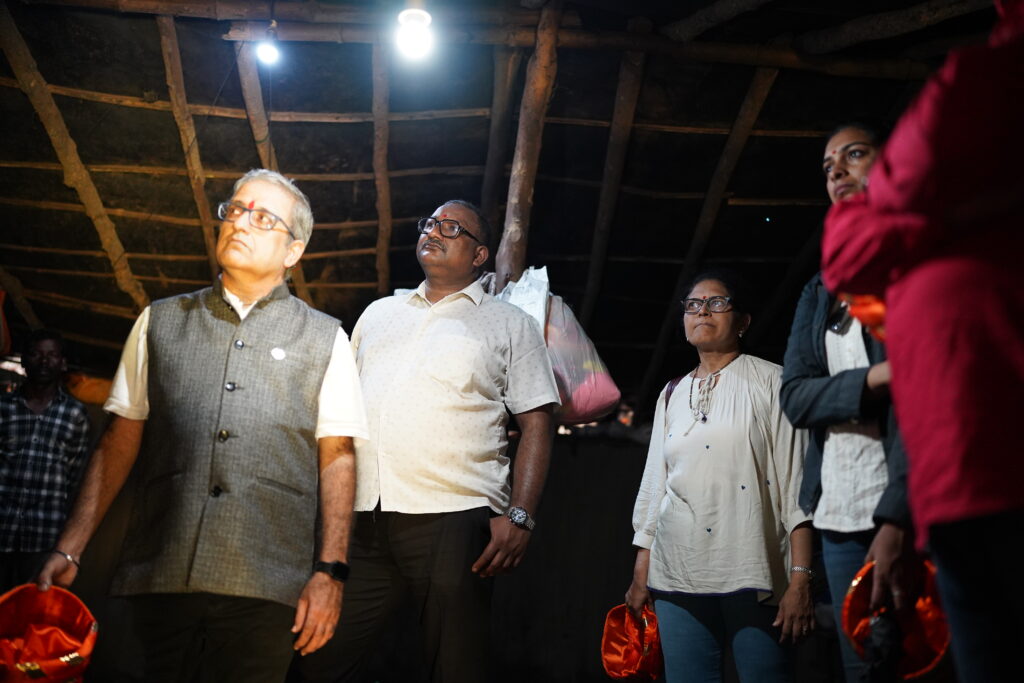
Short answer. You map it yourself. You count who lives there, confirm they want light, form a committee that will own the system, train them to run it, install it with their labour, and hand it over. That is what Mission URJA does in settlements the grid has never reached and the census has never counted.
TREEI works in hamlets that do not appear on government rolls. No electricity authority has a record of them. No district plan allocates a line. The families who live there — often Adivasi, Dalit, or landless labour — have been outside the infrastructure map for generations.Standard rural electrification assumes an address, a panchayat entry, a surveyed site. These hamlets have none of that. So Mission URJA builds the documentation, the institution and the infrastructure together, in that order.Why this is hard
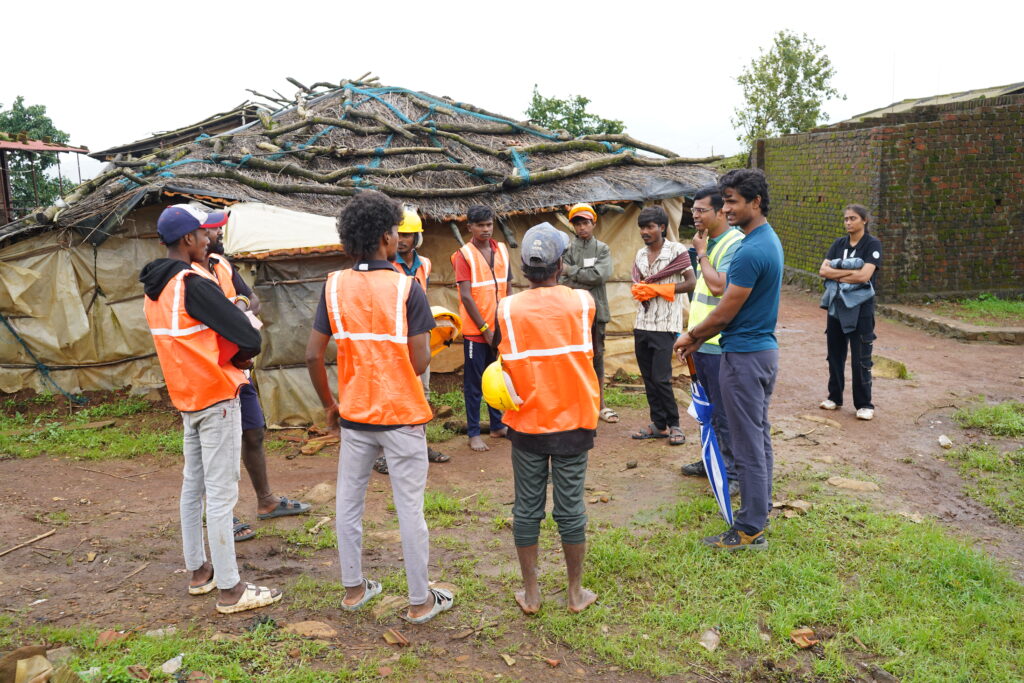
Standard rural electrification assumes an address, a panchayat entry, a surveyed site. These hamlets have none of that.
Step one: site identification and consent
TREEI does not choose villages. District officials, partner organisations or hamlet residents themselves request assessment. The field team visits, meets families, and explains what the project will and will not do. It will not bring power to homes. It will light public spaces. It will require a committee, a small financial contribution per household, and labour during installation.If the hamlet agrees, the team proceeds. If not, the site is withdrawn. Consent is checked again at every stage.Step two: mapping and baseline survey
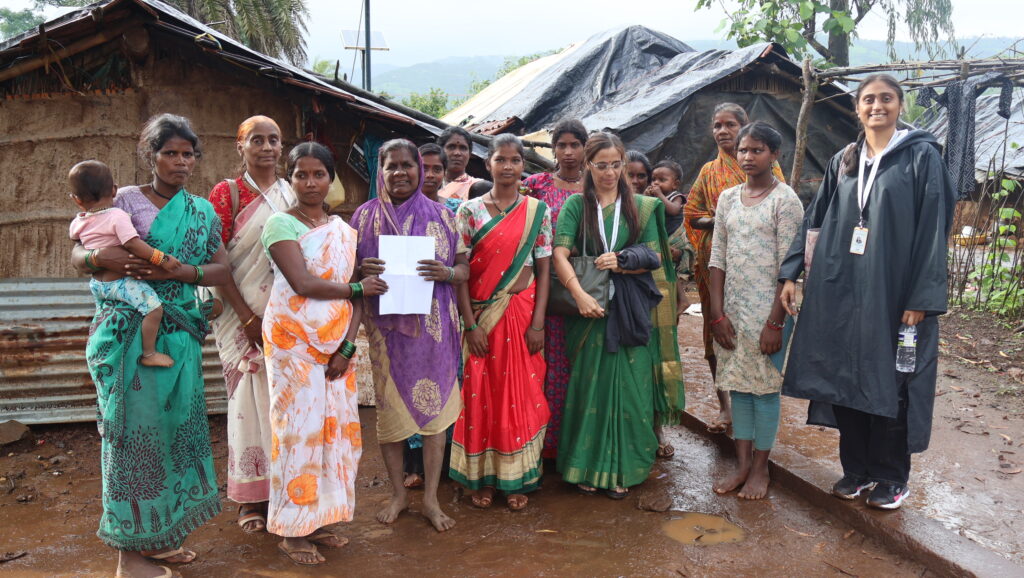
The team counts households, notes the condition of shelters, records occupations and sources of income, maps water points and common spaces, and photographs the site. This documentation becomes the hamlet's first formal record. In some cases it has been used to support land tenure claims or applications for ration cards.The survey also identifies who is willing to serve on the Village Energy Committee and who can be trained as a technician. Women are prioritised for both roles.Step three: institution design
A Village Energy Committee is formed, with a minimum of five members. The committee opens a joint bank account, adopts a resolution laying out roles and responsibilities, and receives training in basic financial record-keeping and system operation.This is the most time-consuming step. Many residents have never held a bank account or signed a resolution. The training is conducted in the local language, often over several sessions, until every committee member can explain how the system works and what to do if it stops.Step four: system design and costing
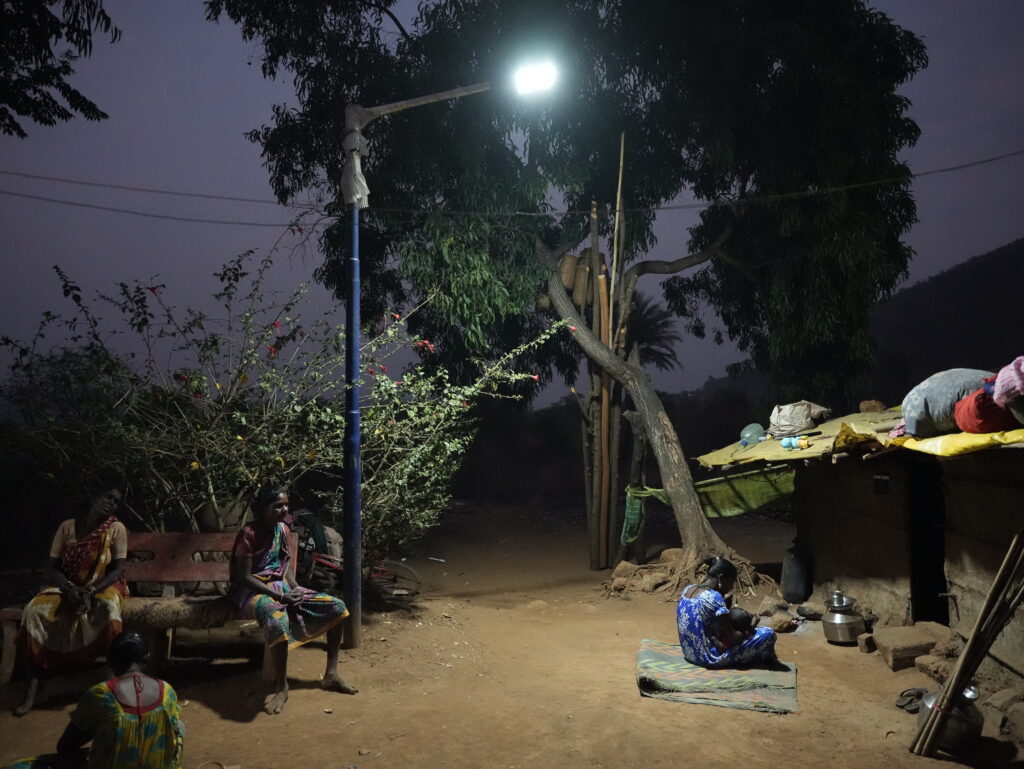
The technical team designs a layout based on the map. Each pole is sited to serve common ground — lanes, squares, water points — not individual plots. The number of poles, battery capacity and panel wattage are calculated to match the hamlet's size and the terrain.Step five: installation with community labour
Foundations are dug, poles are erected, panels and batteries are mounted, and wiring is laid. Wherever possible, residents provide the labour. Skilled tasks — panel alignment, inverter configuration — are handled by trained technicians, some of whom are recruited from previous Mission URJA sites.Using local labour reduces cost, builds familiarity with the system, and ensures that someone in the hamlet knows how it was put together. That knowledge makes future repairs faster and cheaper.Step six: handover and commissioning
Once the system is tested and running, it is formally handed over to the Village Energy Committee. A commissioning ceremony is held, attended by residents, field staff, and sometimes district officials. The committee is given the system documentation, a maintenance checklist, and contact details for technical support.From that point, the hamlet owns the system. TREEI provides remote monitoring and responds to requests for support, but day-to-day operation and minor repairs are the committee's responsibility.What it takes
What we still need to know
The facts. • Programme geography: which districts, blocks or hamlets Mission URJA is currently active in
• Dates: when the programme began, when the photographs were taken, when any named site was commissioned
• Costs: unit cost per household, per pole, or total project cost
• Household contribution: amount and structure
• Scale: number of hamlets completed, number of poles installed, number of households served
• Partners or funders: no organisation may be named unless the brief confirms a signed agreement
• Quotations: no resident, official or committee member is quoted unless the brief supplies the words verbatim
• Technical specifications: panel wattage, battery capacity, lighting hours, or warranty terms
• Outcomes: any claim about post-installation performance, maintenance incidents, or long-term ownership
The method described here reflects TREEI's documented model. The specifics — where it is happening, how much it costs, and who is funding it — are missing because they were not supplied. Once those facts are approved, they can be added to the piece without altering its structure.
Explore the work behind this story
See our programs →