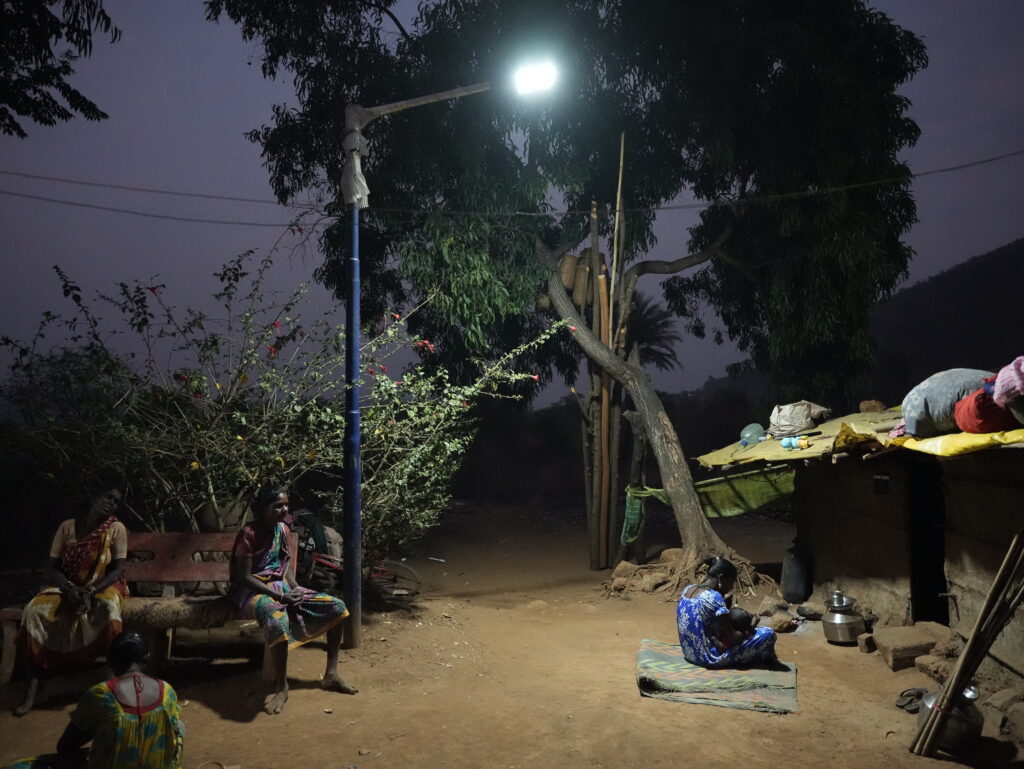
What it takes to light a village that owns its power
2026-09-23 · 7 min read · Mission URJA — Village
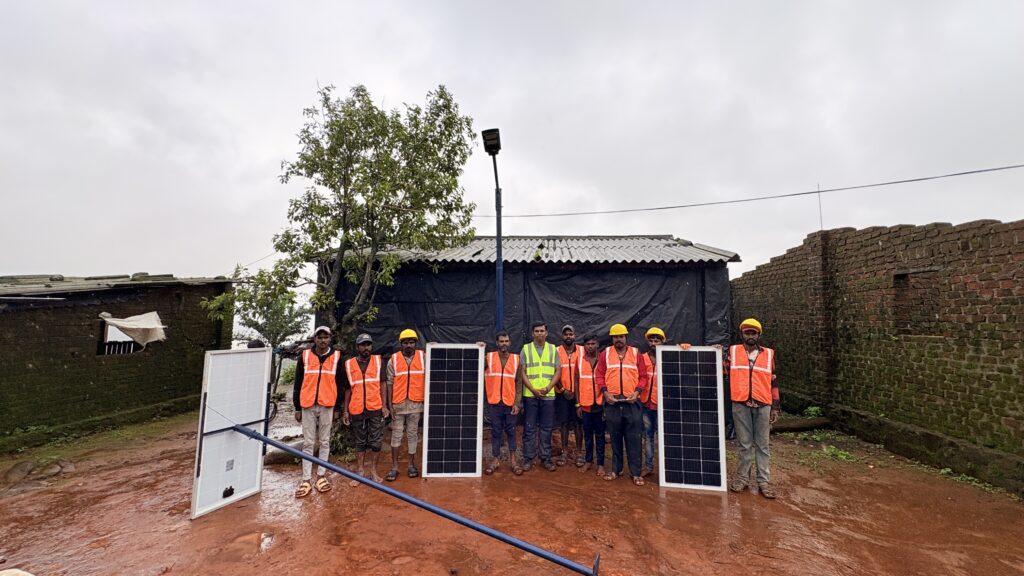
Installation proceeded through monsoon conditions, with equipment protected and grounding tested before panel mounting began.
On 13 February 2024, the Union Cabinet launched PM Surya Ghar, committing to rooftop solar at scale and advancing India's push toward net-zero emissions. The scheme targets urban households with grid connections and subsidy structures designed for existing electricity consumers. But in India's most remote tribal villages where the grid has never arrived a different model is required. Mission URJA builds decentralised solar and hydro systems in settlements that have no prior electricity access, and designs them to be owned and maintained by the communities themselves.This is a partnership model built against failure. TREEI begins not with what works in theory, but with every reason installed systems fail in practice: component degradation, maintenance gaps, knowledge deficits, dependency on external technicians, community disengagement. The solutions are then built backwards from those obstacles through technical design, training structures, and governance handover so that when the installation team leaves, the power stays.
What the commitment was made against
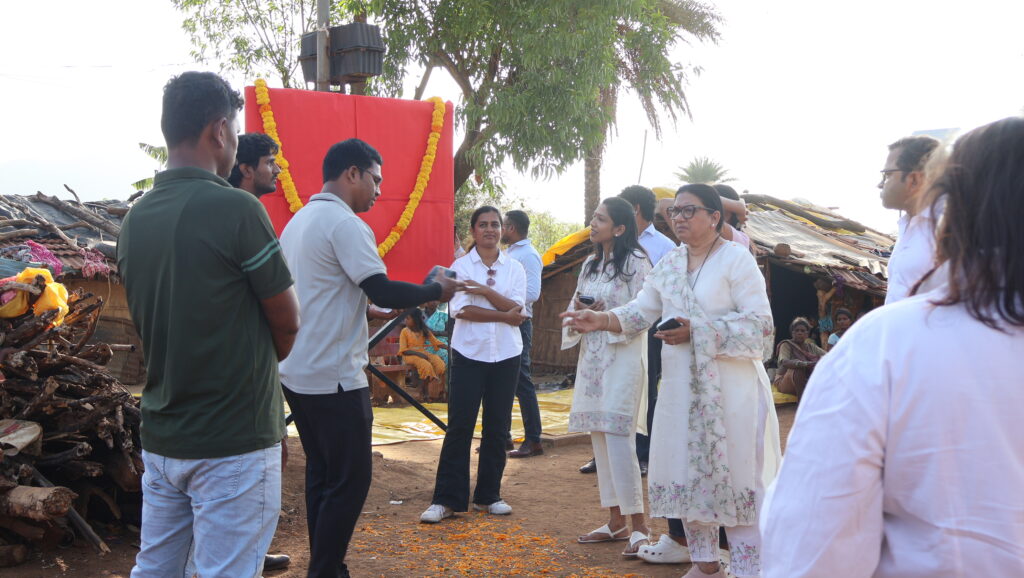
The commissioning ceremony marked the formal handover to the village Urja Committee, trained to operate and maintain the system.
The challenge in tribal electrification is not the first light. It is the hundredth night, the monsoon after commissioning, the fault that occurs when no engineer is present. Decentralised renewable energy systems fail most often not because the technology is inadequate, but because the social and technical scaffolding around them collapses. Maintenance is deferred, tariffs go uncollected, batteries degrade without replacement, and within two years the system is dormant.Mission URJA's approach begins with a survey of the obstacles. Installation teams identify terrain constraints, seasonal access issues, component sourcing delays, and skill availability. They map the reasons systems go dark: lack of local repair knowledge, dependence on external suppliers for consumables, absence of community governance, and no revenue model to fund replacements. Only then is the system designed—not just to generate electricity, but to survive those conditions.
What the partnership required
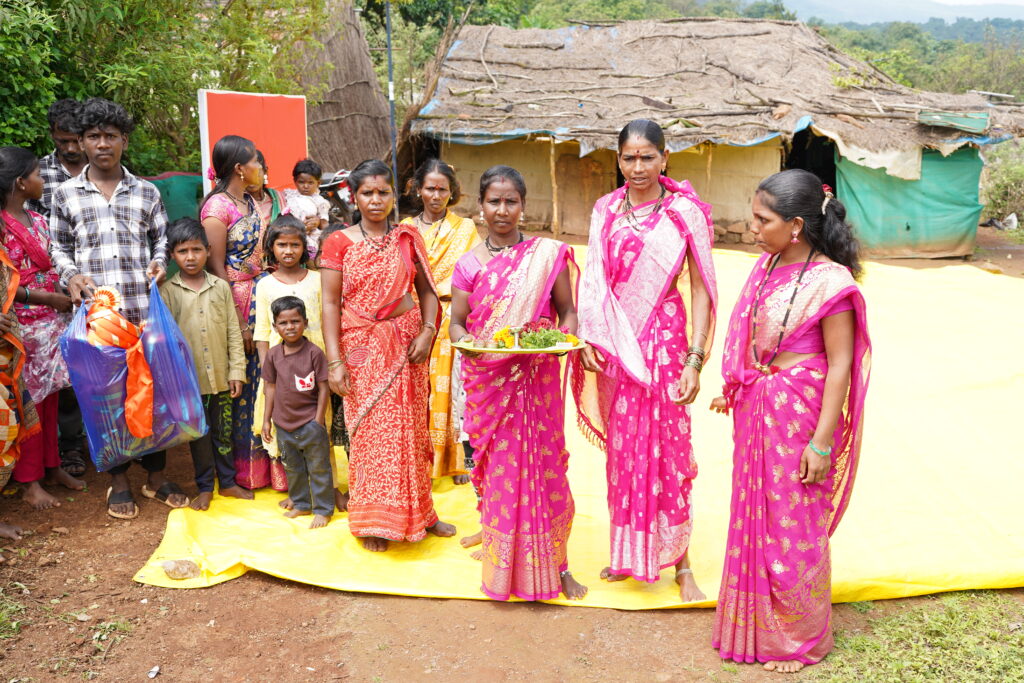
The village Urja Committee comprises local residents responsible for daily operation, tariff collection, and first-line maintenance.
The partnership structure for Mission URJA is not a vendor contract. It is a commitment to a staged handover, in which TREEI and its technical partners are responsible for installation, training, and transition to community ownership. The system is not considered complete when it is switched on. It is complete when the village Urja Committee can operate it, troubleshoot common faults, collect tariffs, and procure replacements without external support.The technical requirements are specified to minimise maintenance complexity. Solar panels, charge controllers, battery banks, and inverters are selected for durability and ease of replacement. Systems are configured to prioritise solar generation, switch to battery storage automatically, and require no manual intervention at dusk. The design eliminates moving parts where possible, uses modular components, and avoids proprietary technologies that lock the village into a single supplier.
The system is not considered complete when it is switched on. It is complete when the village can run it.
Training begins during installation. The Urja Committee—formed from village residents—works alongside the technical team throughout the commissioning process. They learn to read the charge controller, test battery voltage, identify loose connections, and replace fuses. They are trained to recognise the symptoms of panel shading, battery sulphation, and inverter overload. The knowledge transfer is documented, and the committee receives a maintenance manual in the local language.The tariff structure is designed by the village, not imposed. TREEI provides a cost model showing the full lifecycle expense—battery replacement if damaged, panel cleaning, inverter servicing—and the committee sets a monthly household contribution that covers those costs. The tariff is collected locally, held in a village account, and used only for system maintenance and component replacement. Ownership is financial as well as operational.
What compliance looks like
Systems are configured to start automatically at sunset, requiring no manual switching or daily intervention.
Compliance in this model is not measured by installation dates or kilowatt-hours generated. It is measured by whether the system is still running, maintained by the village, after external support has ended. TREEI conducts follow-up visits at [TO CONFIRM: intervals], but these are audits, not rescues. The committee is expected to have logged faults, conducted routine maintenance, and made minor repairs using the skills and tools provided.The systems are designed to be forgiving. Batteries are oversized to reduce depth-of-discharge stress. Panels are mounted to withstand monsoon winds. Wiring is run in conduit to prevent rodent damage. But the ultimate safeguard is not in the hardware—it is in the committee's capacity to act when something does fail.The lightweight portable solar kits supplied to individual households require no maintenance and start working automatically at sunset. Each village has an Urja Committee trained to handle the larger microgrid system, ensuring that communal loads—street lighting, water pumps, community centres—remain operational. The division of responsibility is clear: households manage their own kits; the committee manages shared infrastructure.
What the obstacles were
Installation during monsoon meant working in wet ground, protecting electronics from rain, and testing grounding under high-moisture conditions. Access to the site, Component delivery getting delayed. The technical team adapted the schedule, staged equipment deliveries, and used temporary weather protection until the system could be fully enclosed.The social obstacles were harder to standardise. Some villages had no prior experience with electricity and needed foundational training on what a circuit is, why water and wiring must be separated, and how to recognise electrical hazards. Others had seen failed electrification projects and were sceptical that this one would be different. Building trust required transparency about costs, limits, and maintenance obligations. The commissioning ceremony was not ceremonial. It was the moment the village took formal ownership, with the committee signing the handover document in front of the community.
What it proves
This model proves that electrification in remote villages is not a technology problem. The panels work, the batteries store, the inverters convert. The failure point has always been the gap between installation and operation—the assumption that a system built by engineers will be maintained by villagers with no training, no tools, and no agency. Mission URJA closes that gap by designing the system to be maintainable, training the community to maintain it, and structuring ownership so the village has both the capacity and the incentive to keep it running.It proves that robust design starts with failure modes. Every component choice, every training session, every governance structure is a response to a specific way the system could fail. The result is not a perfect system—it is a resilient one, built to survive the obstacles that rural electrification has always faced and that top-down models have always ignored.And it proves that power that stays is power that is owned. Not by a utility, not by an NGO, but by the people who use it, who understand it, and who know how to fix it when it breaks.
What funders can support
With the PM Surya Ghar mission now in full rollout, India's renewable energy infrastructure is expanding rapidly—but the grid remains out of reach for the country's most remote settlements. Corporate funders and CSR programmes have an opportunity to support electrification models that extend beyond grid-connected households and reach the villages that policy alone will not serve.Mission URJA scales by replicating the model—not the equipment, but the process. Each new site requires the same staged approach: survey the obstacles, design against failure, train the committee, hand over ownership. Funding this work means funding not just hardware, but the knowledge transfer and governance structures that make the hardware last. It means investing in villages that will still have power in five years, ten years, after the engineers have gone and the ceremonies are forgotten.
Thank you for your dedication to TREEI! To keep approvals smooth for the whole team, please submit this between 8:30am to 7pm (Mon–Sat). Requests raised outside these hours are paused — send it again in that window and it'll go right through. Thanks for understanding!
Approval hours (IST) Mon–Sat · 8:30 AM – 7:00 PM Closed · 7:00 PM – 8:30 AM & all day Sunday