Why the Mula–Mutha Needs Neighbours, Not a Mega-Project
Field note · Program DHARA
A river is not restored from a boardroom. It is restored where people meet it.
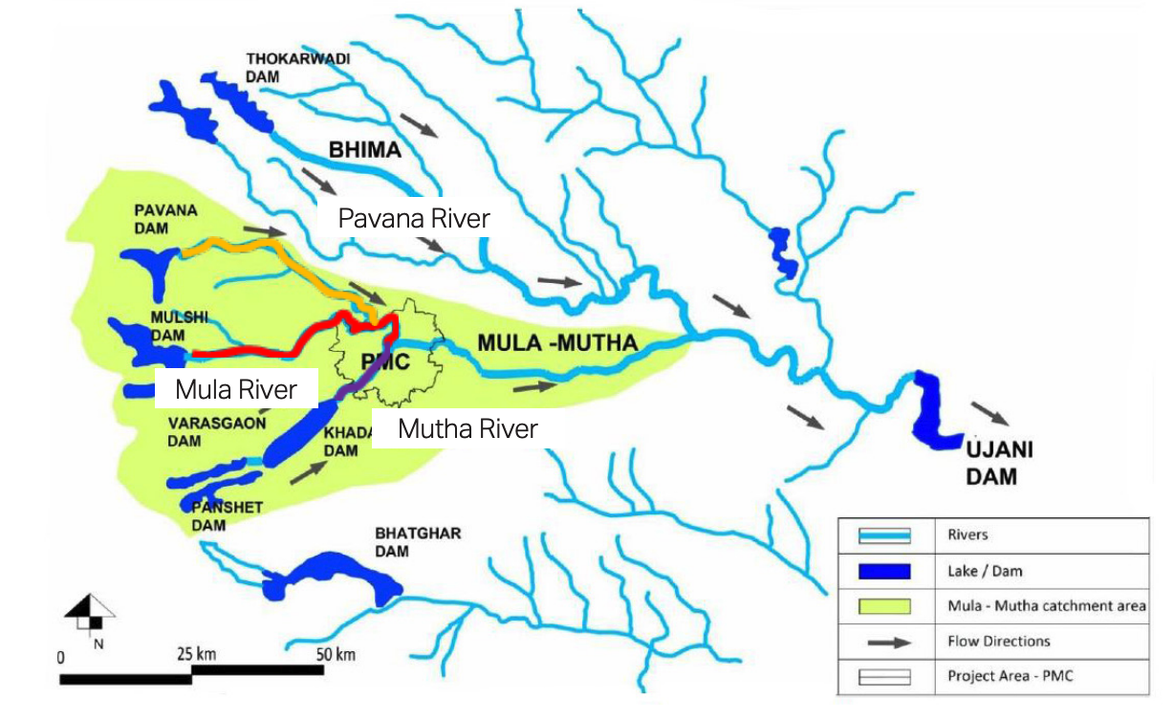
Program DHARA restores Pune's Mula and Mutha rivers one node at a time. Each node gets six layers: interception of floating waste, aeration, floating wetlands, native riverbank planting, continuous water-quality monitoring, and trained river stewards from the neighbourhood. Phase 1 covers four priority nodes across the Pune and Pimpri-Chinchwad stretches.
Figures as of October 2026 from our live public dashboard.
Why do Pune's rivers keep choking?
The Mula and Mutha carry the city's waste downstream: floating plastic, untreated effluent, and the offerings and debris left after every festival. Big clean-ups clear the surface for a day. The causes keep flowing the next morning.
Why node by node instead of one big project?
A single river-wide project is distant, slow and hard to hold anyone to. DHARA breaks the river into nodes: high-impact, feasible stretches, each with its own stewards, interventions and accountability. Recovery becomes visible to the people who walk past it every day, and that makes it hard to reverse.
Interception
Barriers stop floating waste and effluent before it spreads downstream.
Aeration
Oxygen brought back so the water can support life again.
Floating wetlands
Rafts of plants whose roots and microbes filter the water naturally.
Stewardship
Trained river stewards from the neighbourhood keep each node cared for.
The remaining two layers, native riverbank planting to green and stabilise the banks and continuous monitoring with data shared openly, complete the six at every node.
“The river needs neighbours.”Program DHARA
What does a node go through?
- Node assessment. Mapping the pollution load and feasibility.
- Design and approvals. Restoration design and permissions.
- Installation. Interception, aeration, wetlands and planting.
- Stewards take charge. Community stewards trained for the node.
- Monitoring. Data-led upkeep with the community, ongoing.
How can companies and citizens take part?
CSR partners can adopt one or more restoration nodes with a formal MoU, on-site recognition, water-quality reports and employee volunteering days on the river. Residents, students and volunteers can join clean-up drives or train as river stewards for their own stretch.
Adopt a river node.Each node follows the same cycle from the day the MoU is signed, at any time of year.
Plan a node with us →Build something that's still working in year four.
CSR lead, donor or volunteer: there's a place for you in this work.
Frequently asked questions
What is Program DHARA?
TREEI's programme to restore Pune's Mula and Mutha rivers node by node, with six restoration layers and community river stewards.
How does DHARA clean the river?
Through interception of waste, aeration, floating wetlands, native riverbank planting, continuous monitoring and trained river stewards.
Can a company adopt a river node in Pune?
Yes. CSR partners can adopt one or more DHARA nodes with an MoU, water-quality reports and employee volunteering days.