Sixty-Seven Villages: The Model at Scale
Case study · Mission URJA Village
A CSR team with a serious budget needs one answer before anything else: can you absorb our money and deliver at volume?
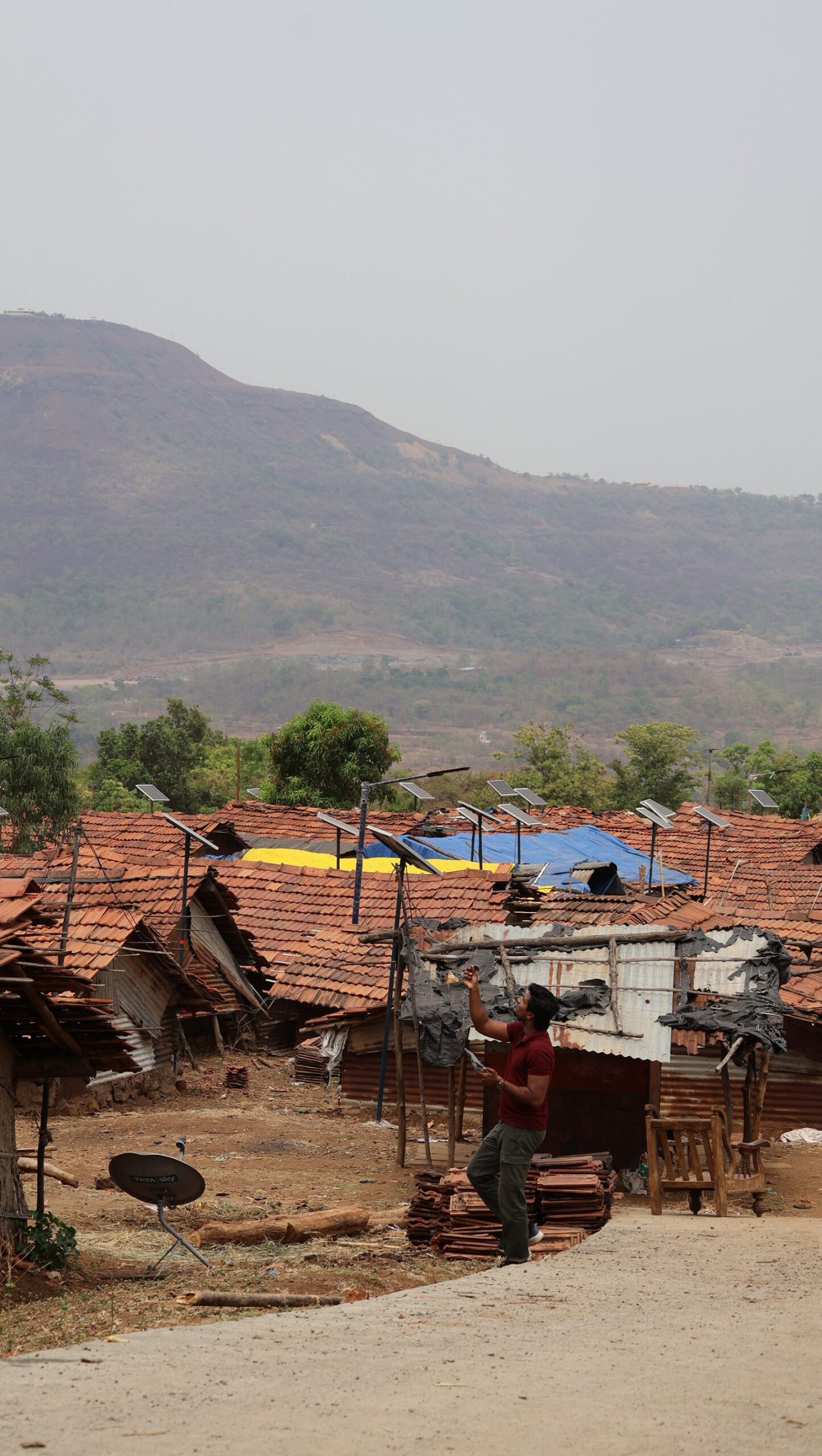
Mission URJA has now energised 67 tribal villages by repeating the same process each time: a socio-economic survey, an open village sabha and URJA Samiti, a village-set contribution, installation with local labour, technician training, and a ledger that runs from handover onwards. The next step is 100 villages by 2028.
Figures as of October 2026 from our live public dashboard.
What does scale mean for village solar?
Scale in Mission URJA does not mean a bigger installation. It means the same sequence, done the same way, in village after village: Katkari hamlets in Mulshi, Khalapur, Haveli and Mawal that the grid never reached. Sixty-seven villages in, the process is the product.
Every one of the 67 villages is on our live dashboard, with 41 already reporting generation village by village as their records go live.
What gets repeated in every village?
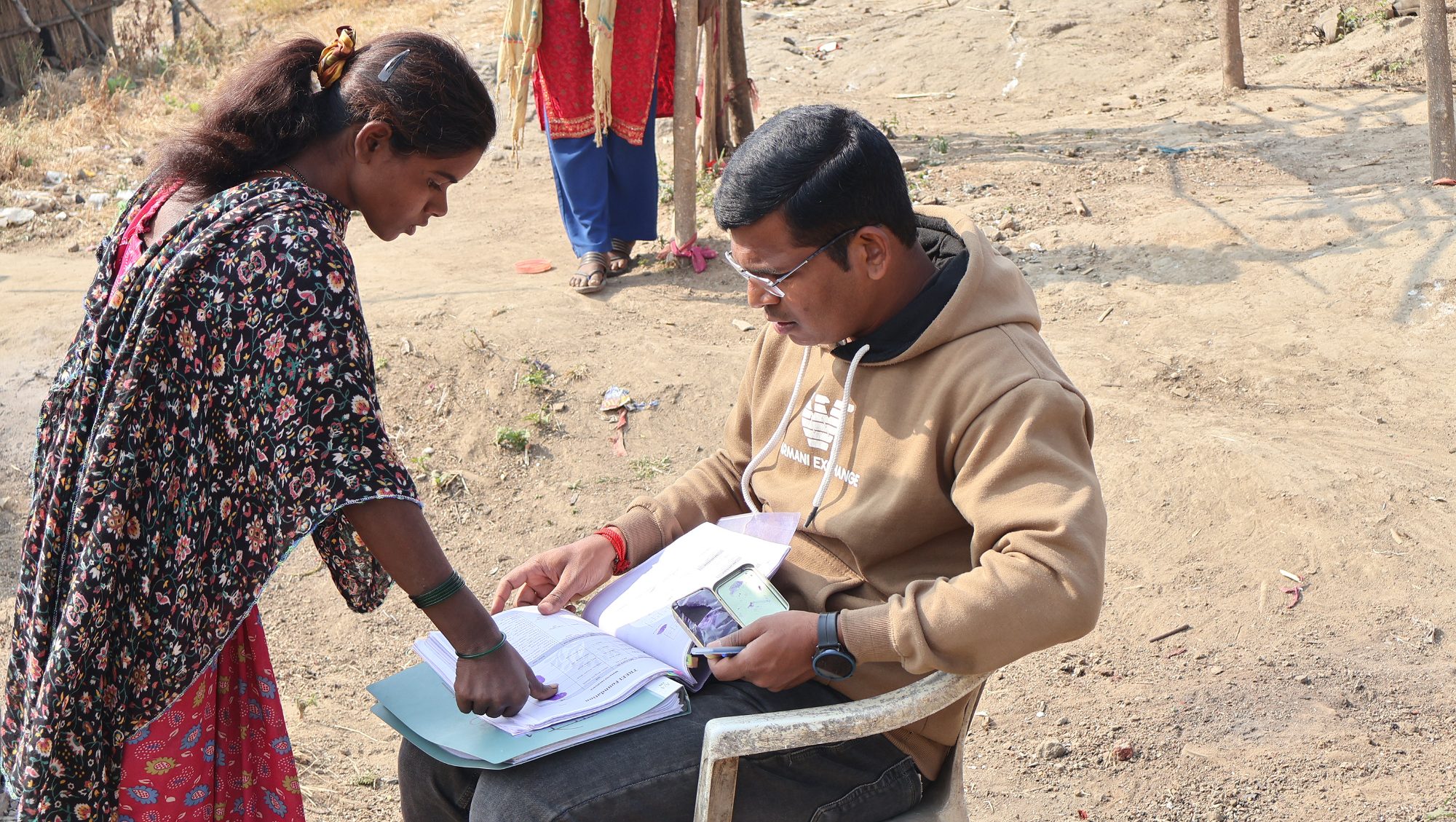
- Survey. Villages are selected through a detailed socio-economic survey: households, terrain, access and need.
- Sabha and Samiti. The village agrees in the open and forms an URJA Samiti to own the system.
- Contribution. The village sets a monthly household contribution that funds the URJA Corpus for upkeep.
- Installation. Household systems, street lights and CCTV go in with local labour.
- Technician. Local youth are trained to maintain the system before we step back.
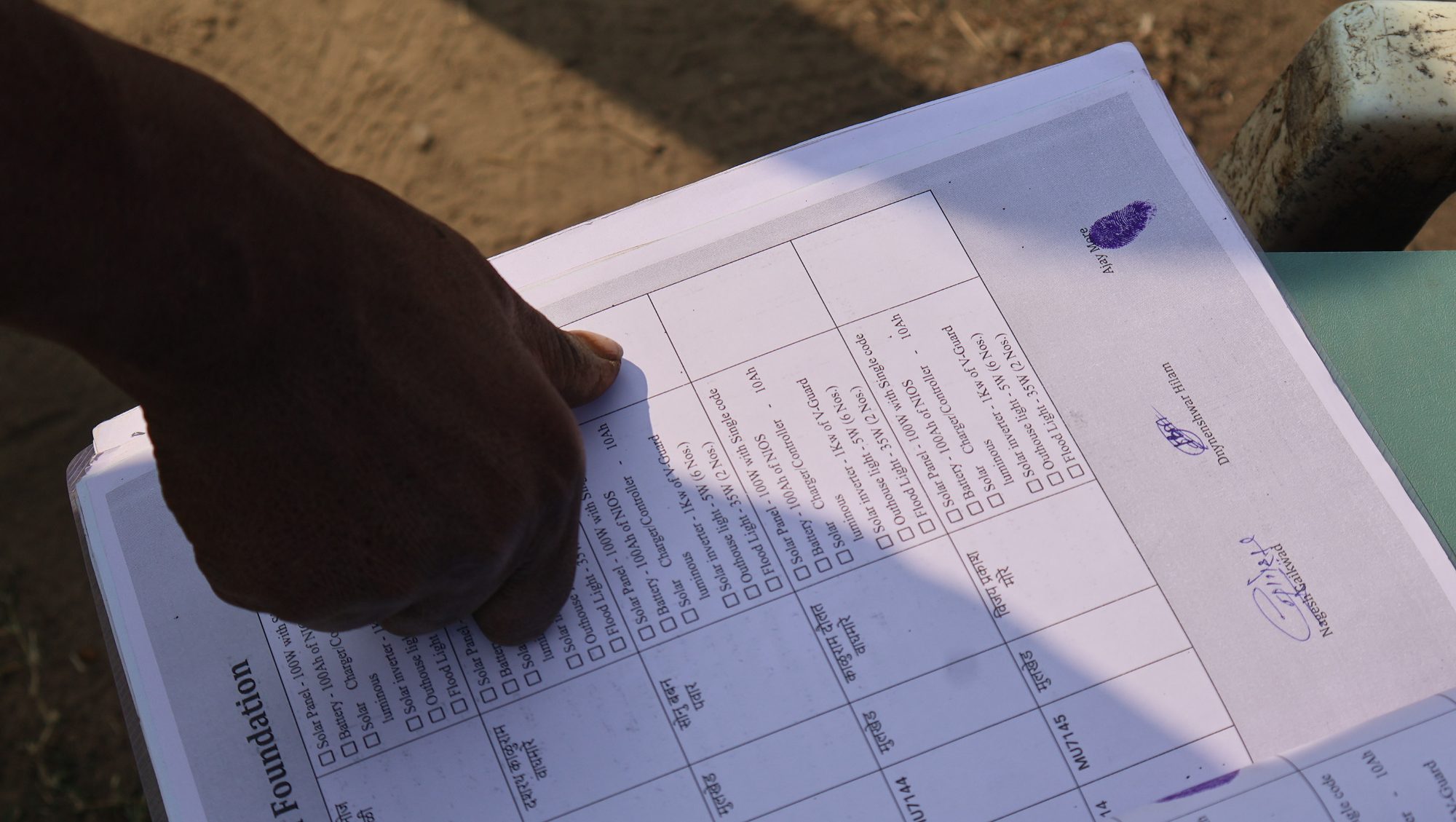
- Ledger and handover. Faults, contributions and repairs are recorded, and the village takes formal ownership.
What changes at volume, and what does not?
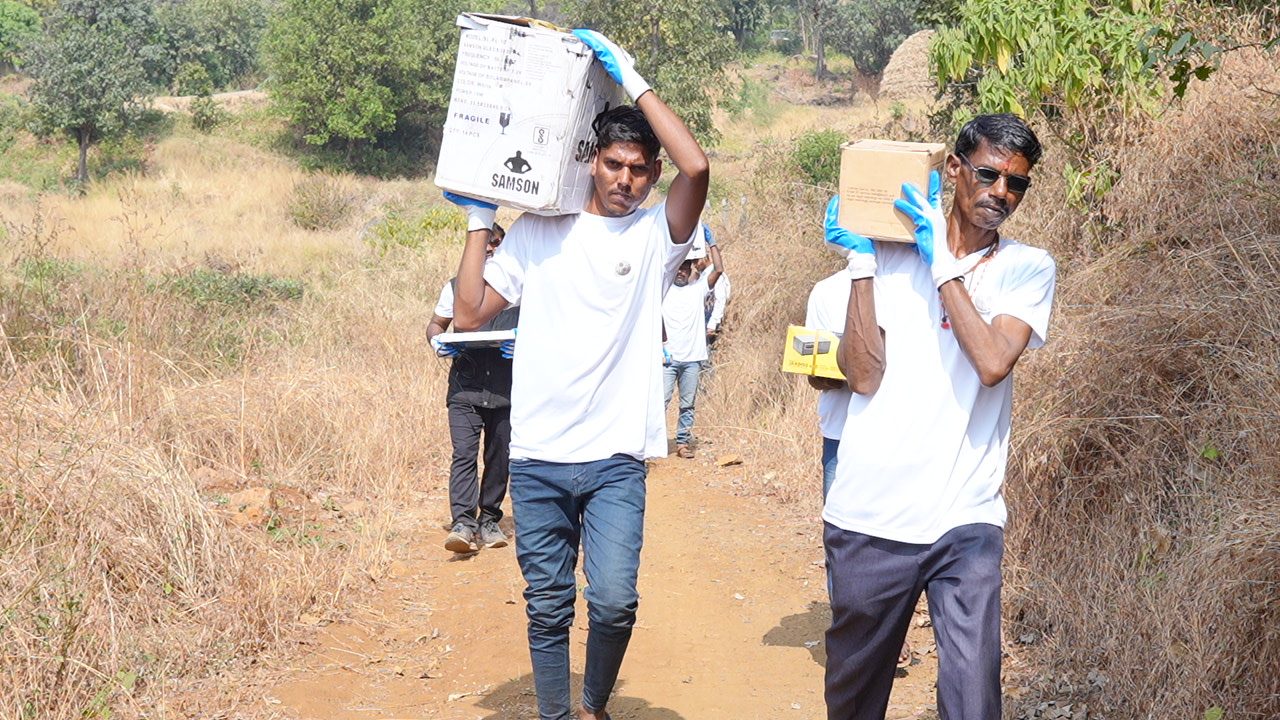
What changes is logistics: staging deliveries, carrying kits up to hamlets with no road, scheduling around the monsoon. What does not change is the order of the steps. A village never receives hardware before it has a Samiti, and never reaches handover without a trained technician.
How does a CSR budget map onto the model?
Each village follows the same cycle from the day the MoU is signed: foundation and Samiti in months 1–2, design and procurement in months 3–5, installation in months 6–8, reinforcement in months 9–10, and handover from month 11. A partner can fund one village or many, and join at any point in the year.
Leading CSR at your company?Every TREEI programme maps to Schedule VII and comes as a defined outcome with an MoU and a live dashboard.
Find your CSR fit →Build something that's still working in year four.
CSR lead, donor or volunteer: there's a place for you in this work.
Frequently asked questions
How many villages has Mission URJA electrified?
67 tribal villages are energised. The 41 live villages are each run by their own URJA Samiti, local technicians and community corpus.
Can Mission URJA scale for a large CSR budget?
Yes. Every village follows the same six-step cycle from MoU to handover, so a partner can fund one village or many.
Where are Mission URJA villages?
In Mulshi, Khalapur, Haveli and Mawal, in Katkari tribal hamlets of the Sahyadri range.