What One Mission URJA System Is Made Of
Case study · Mission URJA Village
Every CSR team eventually asks the same question about rural solar: is the hardware serious? Here is the honest answer, part by part.
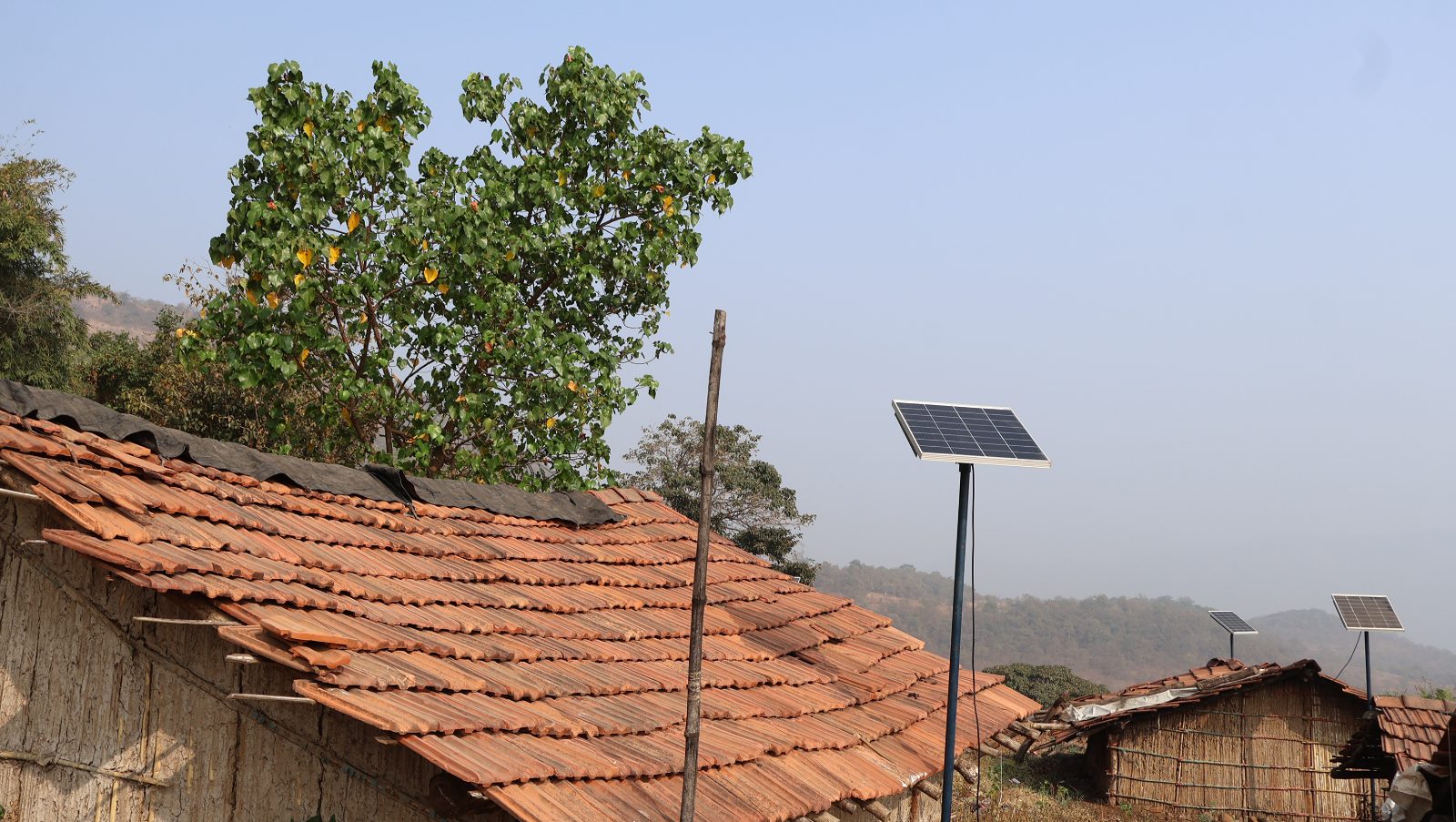
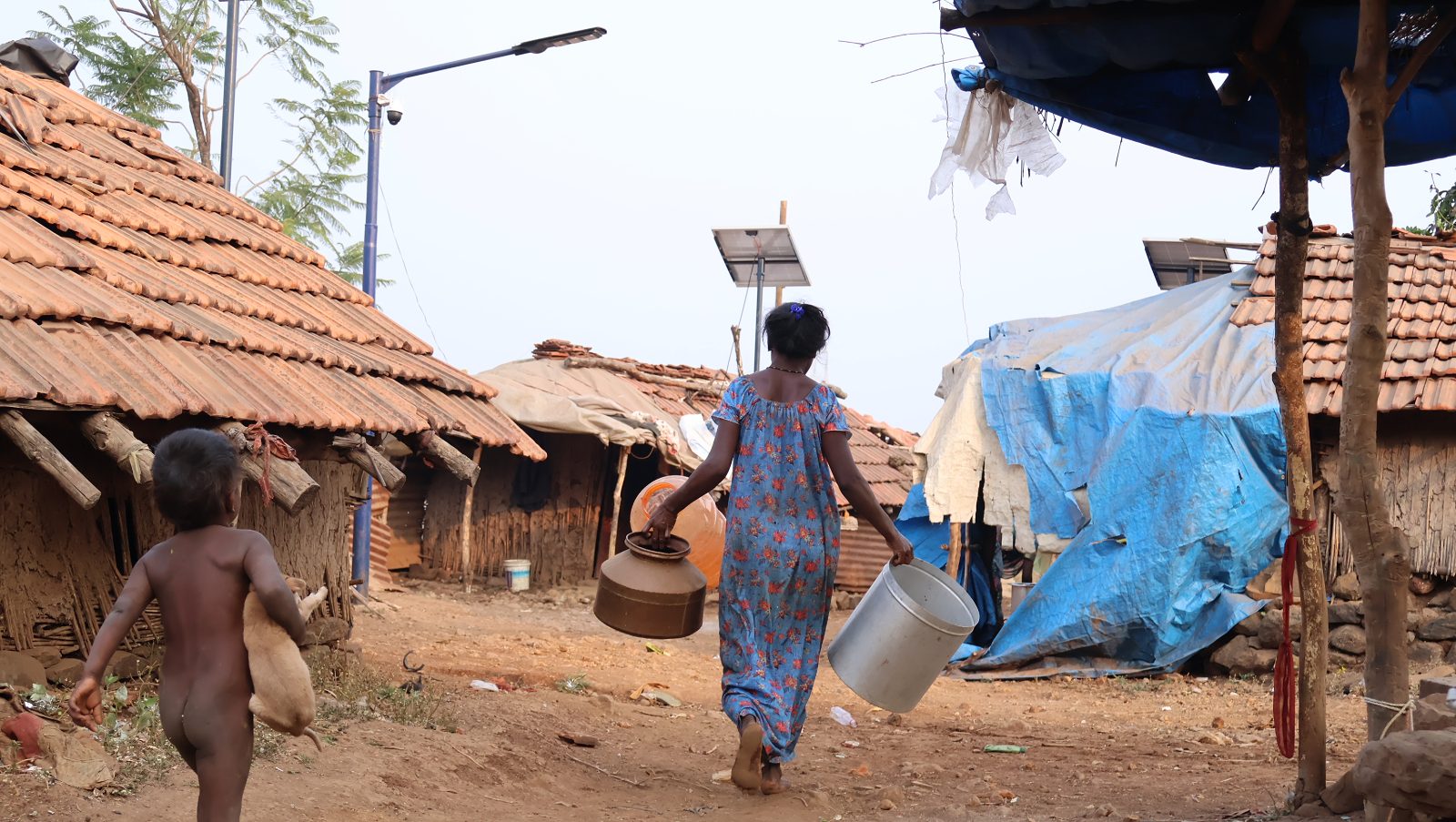
A Mission URJA system gives an off-grid tribal village four things: a decentralised solar system for every home, fully integrated 150 W solar street lights along the lanes, solar CCTV for village safety, and a measurement framework for every kWh. Each street light is one sealed body: panel, battery, controller and LED on one pole, with no trenching, cabling or transformer. Fewer parts and fewer joints mean fewer ways to fail.
Figures as of October 2026 from our live public dashboard.
What does a village actually receive?
Mission URJA works in Katkari hamlets in Mulshi, Khalapur, Haveli and Mawal that the grid never reached. The system is designed around those conditions: steep terrain, heavy monsoons, no repair shop nearby. Every village receives the same four building blocks.
| Component | What it is | Why it is built this way |
|---|---|---|
| Household solar | A decentralised system of 1.5–2 kWh for each home | Power is generated where it is used, so there is no distribution line to break. |
| Community street lights | Fully integrated 150 W solar units along the lanes | Panel, battery, controller and LED in one body: nothing to wire on site. |
| Solar surveillance | Village-wide solar CCTV | Safety after dark, on its own solar supply. |
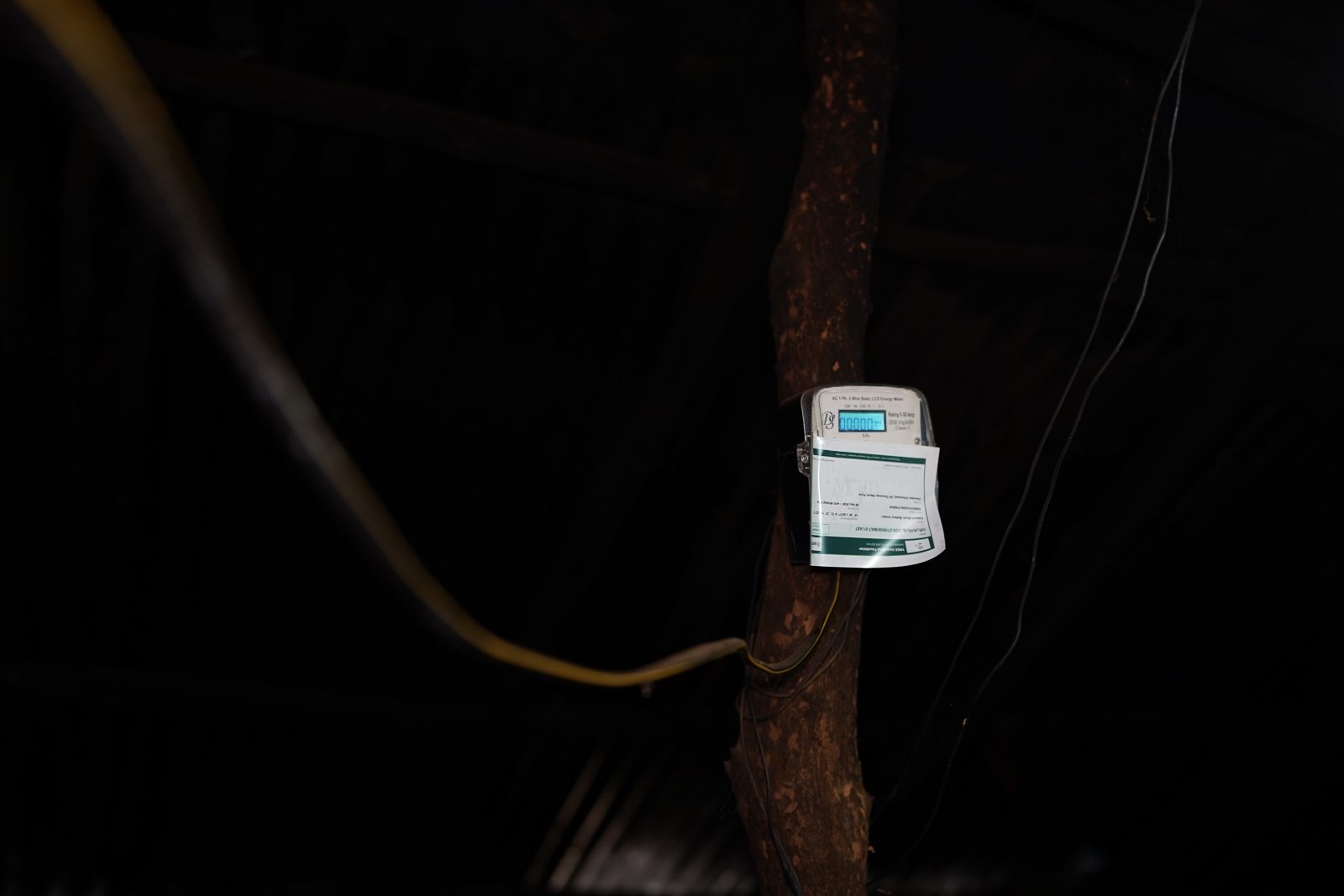
| Energy & carbon metrics | A measurement framework for every kWh and tCO₂e | Performance is tracked, not assumed, and published on our dashboard. |
Why is each light one body, not separate fixtures?
Most failures in rural solar happen at the joints: a cable chewed through, a connector corroded in the monsoon, a battery box left open. An integrated street light removes most of those joints. The panel, battery, charge controller and LED fixture arrive as one unit and go up on one pole.
- No trenching, no cabling, no transformer. The unit goes where light is needed, not where a cable can reach.
- Automatic at dusk. Systems start at sunset with no manual switching or daily intervention.
- Modular and non-proprietary. Components are chosen so a village is never locked into a single supplier.
“The challenge is not the first light. It is the hundredth night, the monsoon after commissioning, the fault that happens when no engineer is present.”From our case study on village-owned power
How is the hardware made to survive the monsoon?
The design starts from the ways systems usually die and works backwards from each one.
- Batteries are oversized to reduce depth-of-discharge stress, so they age more slowly.
- Panels are mounted for monsoon winds on the exposed slopes of the Sahyadris.
- Wiring runs in conduit to stop rodent damage, one of the most common rural faults.
- Grounding is tested before panels are mounted, even when installation runs through the rains.
Who keeps it running?
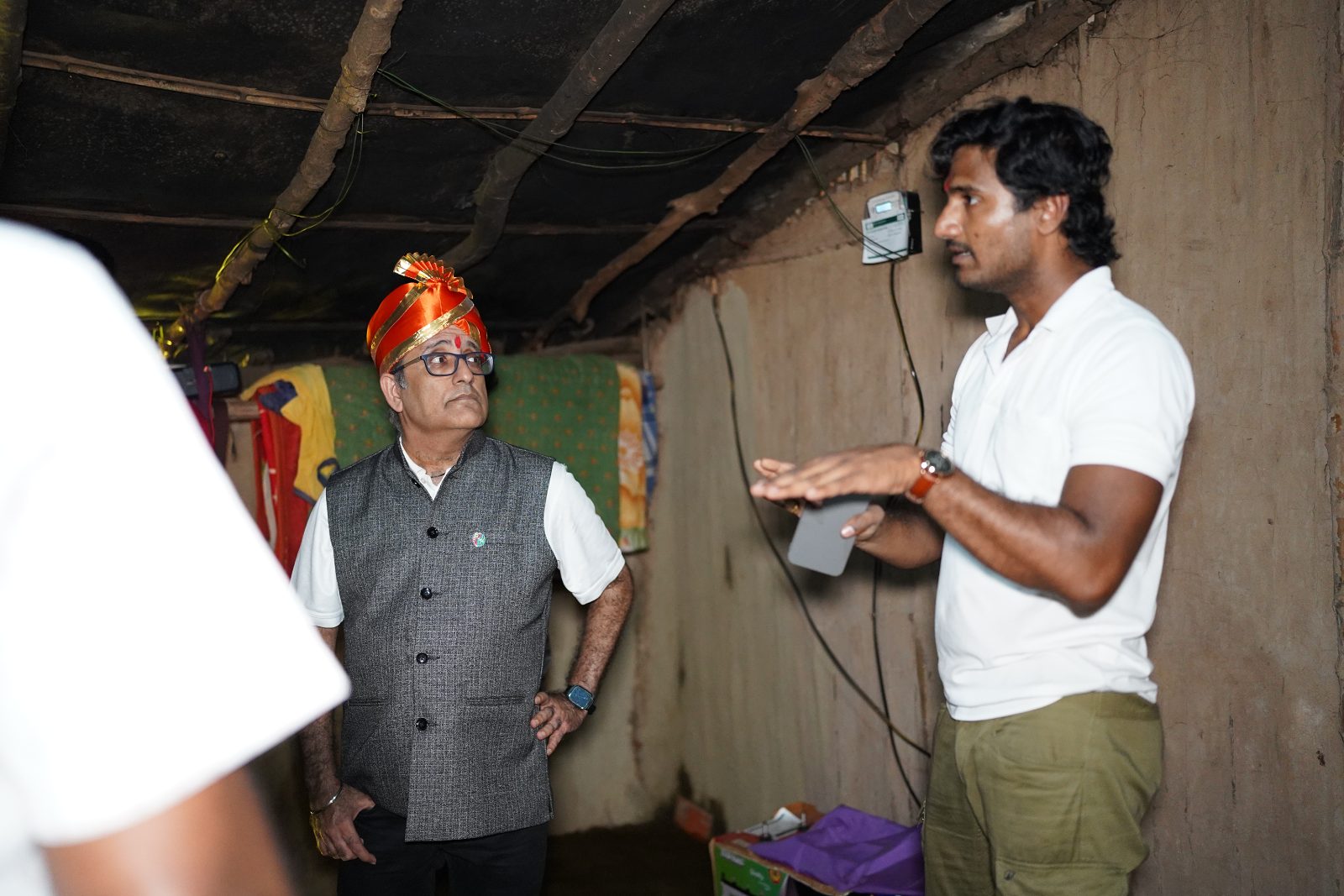
Hardware is only half the system. In every village, local youth are trained as URJA technicians to install and maintain it, so a fault is fixed by a neighbour, not by a call to the city. They learn to read the charge controller, test battery voltage, find loose connections and replace fuses. A village URJA Samiti oversees the system, and a community corpus pays for upkeep.
That is why we describe Mission URJA as decentralised solar with a community-owned ecosystem. The next case study in this series explains that ecosystem in detail.
Leading CSR at your company?Every TREEI programme maps to Schedule VII and comes as a defined outcome with an MoU and a live dashboard.
Find your CSR fit →Build something that's still working in year four.
CSR lead, donor or volunteer: there's a place for you in this work.
Frequently asked questions
What is included in a Mission URJA village solar system?
Household solar of 1.5–2 kWh per home, integrated 150 W solar street lights, village-wide solar CCTV and a measurement framework for energy and carbon.
Why are Mission URJA street lights integrated units?
Panel, battery, controller and LED sit in one body on one pole, so there is no trenching or cabling and far fewer joints that can fail.
Who maintains the solar systems in the village?
Local youth trained as URJA technicians handle maintenance, overseen by the village URJA Samiti and funded by a community corpus.